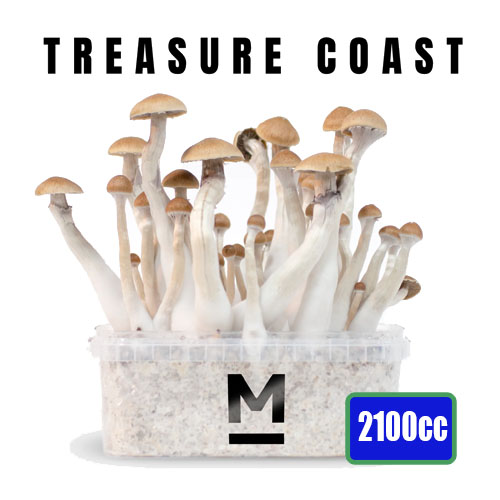
Treasure Coast is a cultivar of Psilocybe cubensis named after a stretch of Florida's Atlantic coast, and that coast is named after a Spanish silver fleet wrecked there in 1715. The name of the place is well documented. The origin of the mushroom culture is not: no collector, date or exact location has ever been published, and the stories that circulate about it cannot be checked.
The coast: three counties and a shipwreck
The Treasure Coast is the part of Florida's east coast made up of Indian River, St. Lucie and Martin counties, with Vero Beach, Fort Pierce and Stuart as its main towns (Wikipedia). The name is young. It was coined by staff of the Vero Beach Press Journal in the early 1960s, after salvage divers began bringing up Spanish coins off the beaches.
The coins came from the 1715 Fleet. According to NOAA's Atlantic Oceanographic and Meteorological Laboratory, a fleet of twelve ships left Havana on 27 July 1715, late in the hurricane season, carrying silver and goods to Spain (NOAA AOML). A hurricane caught it early on 31 July as it left the Bahama Channel. Eleven ships were lost; only the French ship Grifon, which had separated from the others, reached Europe. Three ships sank in deep water and eight were driven onto the reefs and beaches between present-day Fort Pierce and Wabasso, north of Vero Beach. Of roughly 2,500 sailors and passengers, about 1,000 died, among them the fleet's commander, Juan Esteban de Ubilla.
Spanish salvors recovered part of the cargo from camps on the shore, which were raided by the English privateer Henry Jennings. The site was then largely forgotten. Charles Higgs located the old salvage camps in the early 1940s, and after a hurricane in 1955 washed coins onto the beach, the local builder Kip Wagner and his Real 8 Company started the modern salvage that gave the region its name.
| Year | What happened | Source |
|---|---|---|
| 1715 | Eleven ships of the Spanish fleet lost in a hurricane on 31 July | NOAA AOML |
| 1940s | Charles Higgs finds the Spanish salvage camps | NOAA AOML |
| 1955 onward | Kip Wagner and the Real 8 Company salvage coins and cannon | NOAA AOML |
| early 1960s | the name "Treasure Coast" appears in the local press | Wikipedia |
| around 1999 to 2000 | a spore vendor starts selling a cubensis culture called Treasure Coast | DoubleBlind |
The mushroom: what the shop says
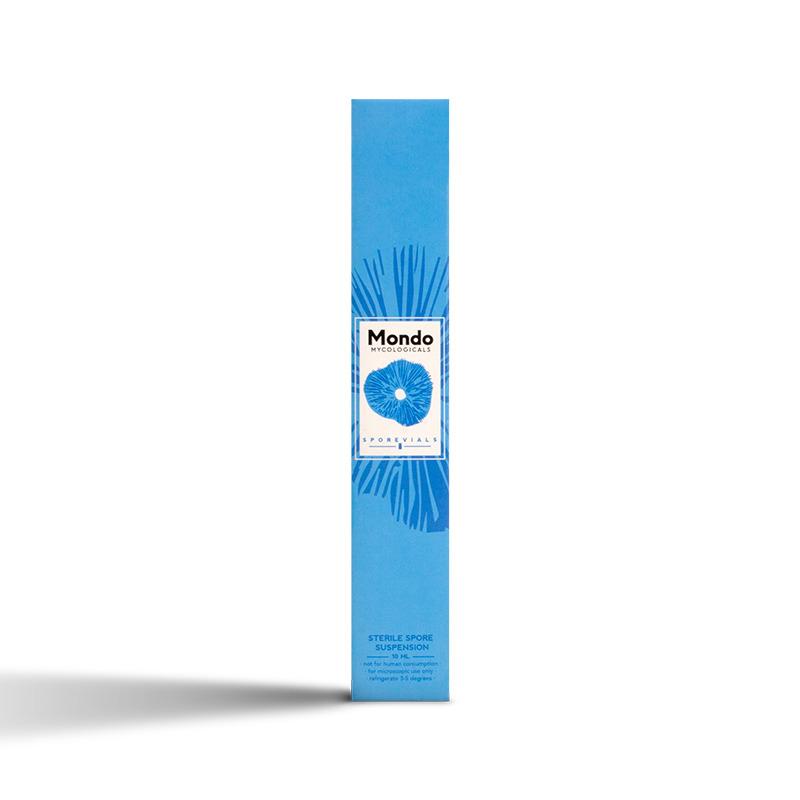
Dutch-Smart's descriptions give the strain a Florida origin. The XXL grow kit text calls Treasure Coast "a Psilocybe cubensis variety originally wild-collected in the Treasure Coast region on Florida's Atlantic coast, around St. Lucie, Indian River and Okeechobee counties", in cattle-ranching country where the mushroom grows on dung. The spore products put it more briefly: "Treasure Coast refers to a region (the east coast) in Florida where this mushroom was discovered."
That fits what is known about the species. P. cubensis grows wild on cattle dung in Florida, and there is a herbarium specimen collected in a pasture at Fort Pierce in 1971 (more on the wild Florida page). A Florida origin for a culture with this name is plausible.
What nobody has documented
The first collection is a gap in the record. DoubleBlind magazine, which looked into the strain's history, concluded that "the identity of who first collected Treasure Coast is a mystery" (DoubleBlind). The earliest dated trace it found is commercial: a long-time spore vendor and forum moderator told the magazine he began carrying Treasure Coast "around 1999 or 2000", without saying where his spores came from.
Online, the original collection is sometimes credited to a grower known only as "Mr. G", who is also linked to the B+ cultivar. DoubleBlind calls those claims suspect. No print source, collection record or photograph supports them, so we count the Mr. G story as legend.
Some strain guides go further in another direction and place the find on Florida's western or Gulf coast (Tripsitter). That conflicts with the name, since the Treasure Coast is on the Atlantic side, and it has no documentary support either. What can be said with confidence:
- the name points to Florida's Atlantic coast;
- wild P. cubensis does grow in that region;
- the culture was on sale in the United States by about 2000;
- who collected it, where exactly and when is unknown.
Albino and leucistic lines
Treasure Coast cultures sometimes produce white or near-white mushrooms. Dutch-Smart's spore text mentions it ("Albino variants sometimes form"), and growers have selected such fruits into separate "albino" or "leucistic Treasure Coast" lines. These are selections from the same cultivar, sold under their own names. The shop's Treasure Coast products on this site are the standard line.
Does the name guarantee the genetics?
Less than the label suggests. A genome study of 86 commercial P. cubensis cultivars found that most were founded from related populations and carry little genetic diversity, the signature of years of cloning and selfing in cultivation (McTaggart et al., 2023). A 2025 review adds that cultivars sold under the same name often lack genetic similarity across suppliers (Kurzbaum et al., 2025). In the DoubleBlind article, the lead author of the genome study described Treasure Coast as a cultivar still largely derived from a landrace and not heavily inbred.
In practice, a Treasure Coast kit from one shop and a Treasure Coast print from a trader elsewhere may not be the same culture. The name tells you the story a culture comes with; the supplier tells you which culture you get. That is one reason recognising the strain by eye is harder than it sounds.
Next: cubensis in Florida's pastures, what the strain looks like and the Treasure Coast products.